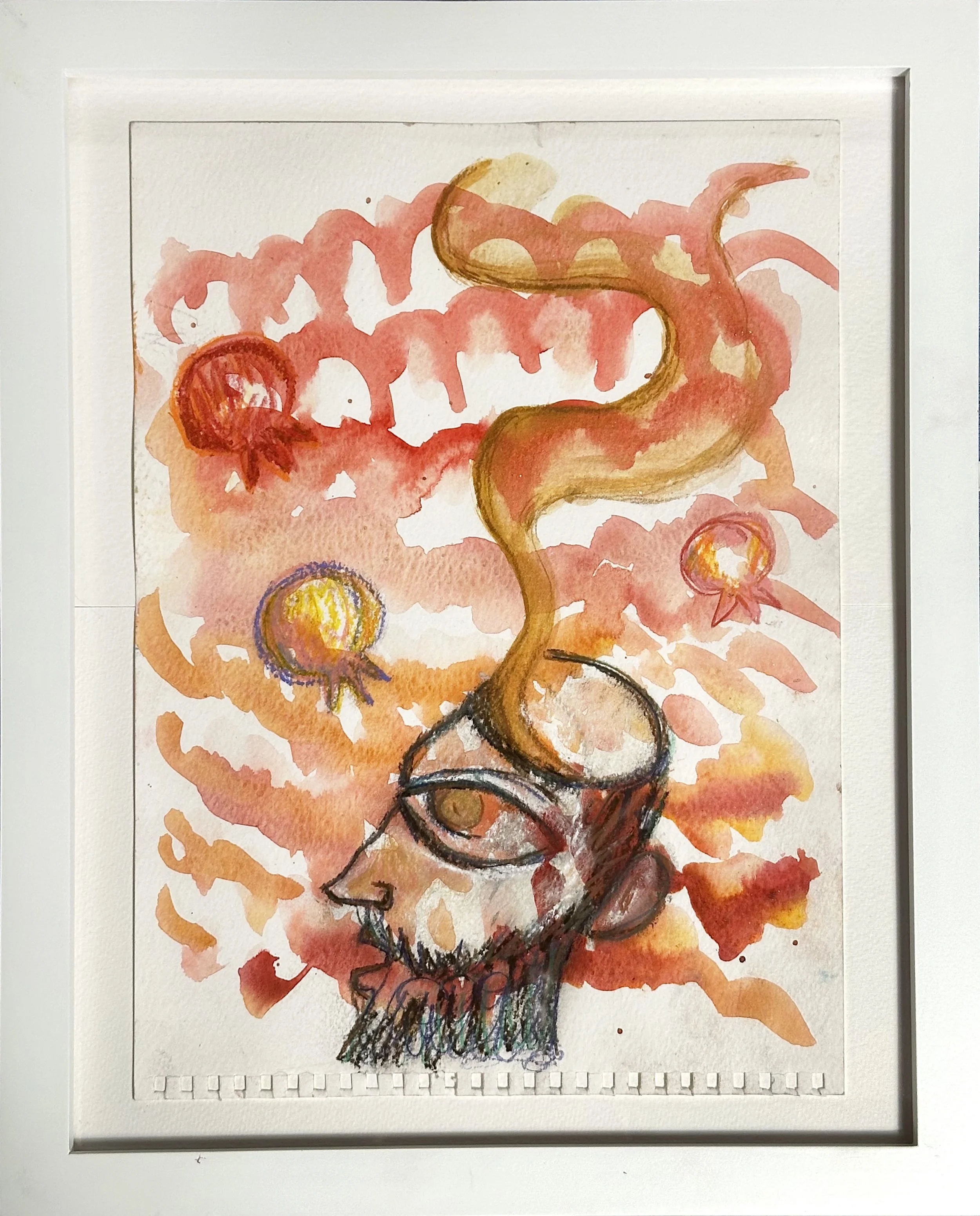
“Divine Influx,” watercolor and mixed media on paper, 9 × 12 inches. 2024.
A friend drew a portrait of me with a yamaka on my head. I said in response, “I prefer to be represented with the yamaka inverted so that it appears that my head is empty.”
Last night, just prior to the music coming on at three a.m. on Kingston Ave. and Albany, in Crown Heights, Brooklyn, I indicated to my friend that my skull is flipped open, my brain tossed out, my intellect totally set aside, as a part of spiritual work. He agreed.
In taking on Chabad-style Chassidic-Jewish (i.e. mystically inspired) lifestyle, I have found a way to live as an artist.
I’m starting to grasp that pursuing a life of art requires a certain bravery in relation to the many unknowns.
Artists in the modern era act like revolutionary figures, pushing the envelope of social ideas around freedom, as well as committing themselves to aesthetic exploration. As per whatever I’m up to: my main philosophy of aesthetic is making moments, and my main revolutionary concept is the notion that the mystical path is a social good which involves psychological responsibility to the unconscious, and ultimately the “religious experience” as inspiration to truly live an actualized life of wholeness and meaning.
I resent the word religious, since it’s so totally loaded in our culture. Really, it’s rooted in the Latin religio, meaning to link—which is cool. In the Jewish context, we speak about heaven and earth, and the unity of the Infinite being realized through expression of the two, like a marriage of physicality and spirituality. This is our purpose.
The ritual of the painting helps me in the abovementioned pursuits or commitments. But the going-beyond-my-intellect is the method, or practice, I return to during this time of year, as well as during other parts of the year (like Purim and Passover).
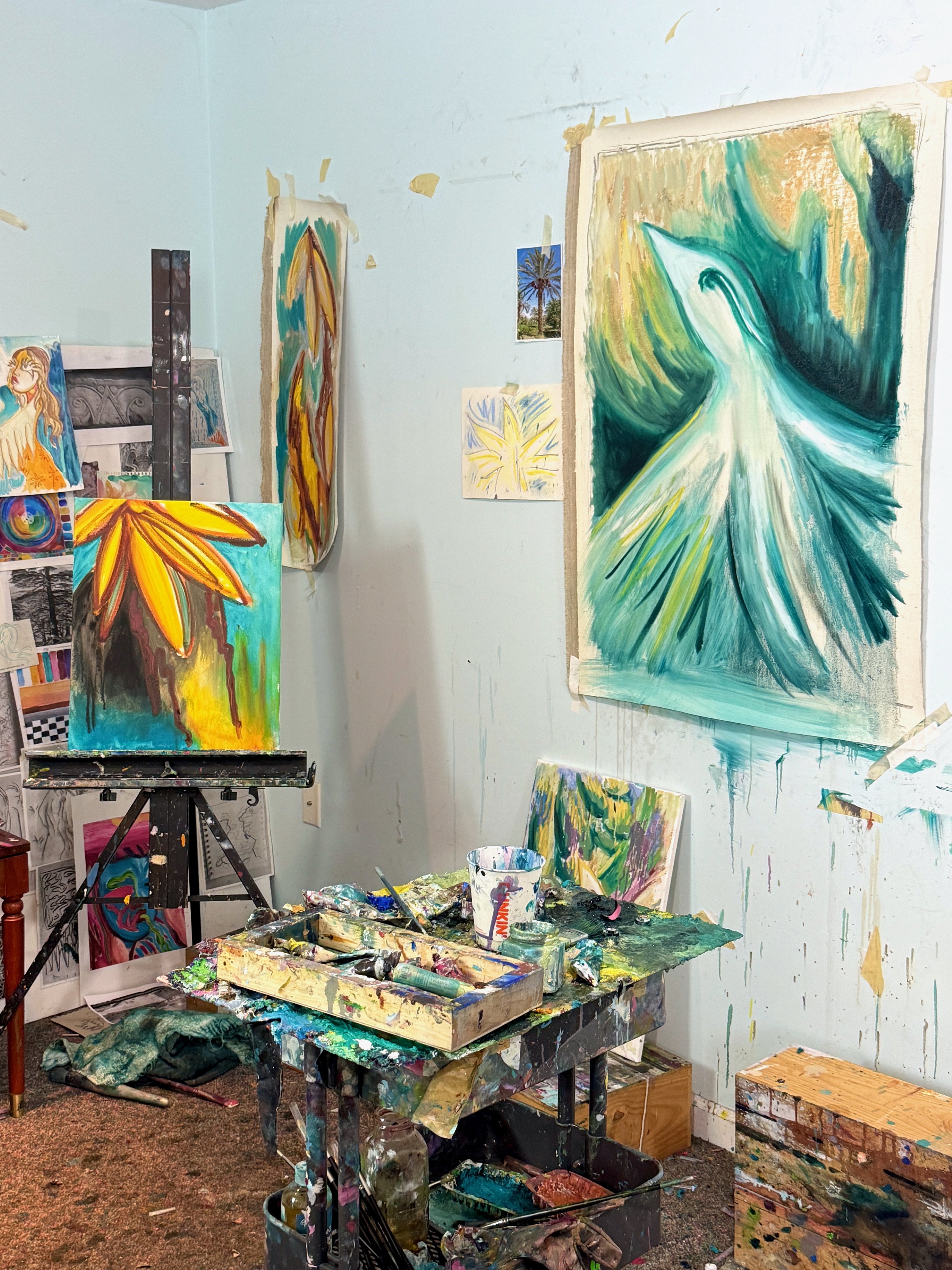
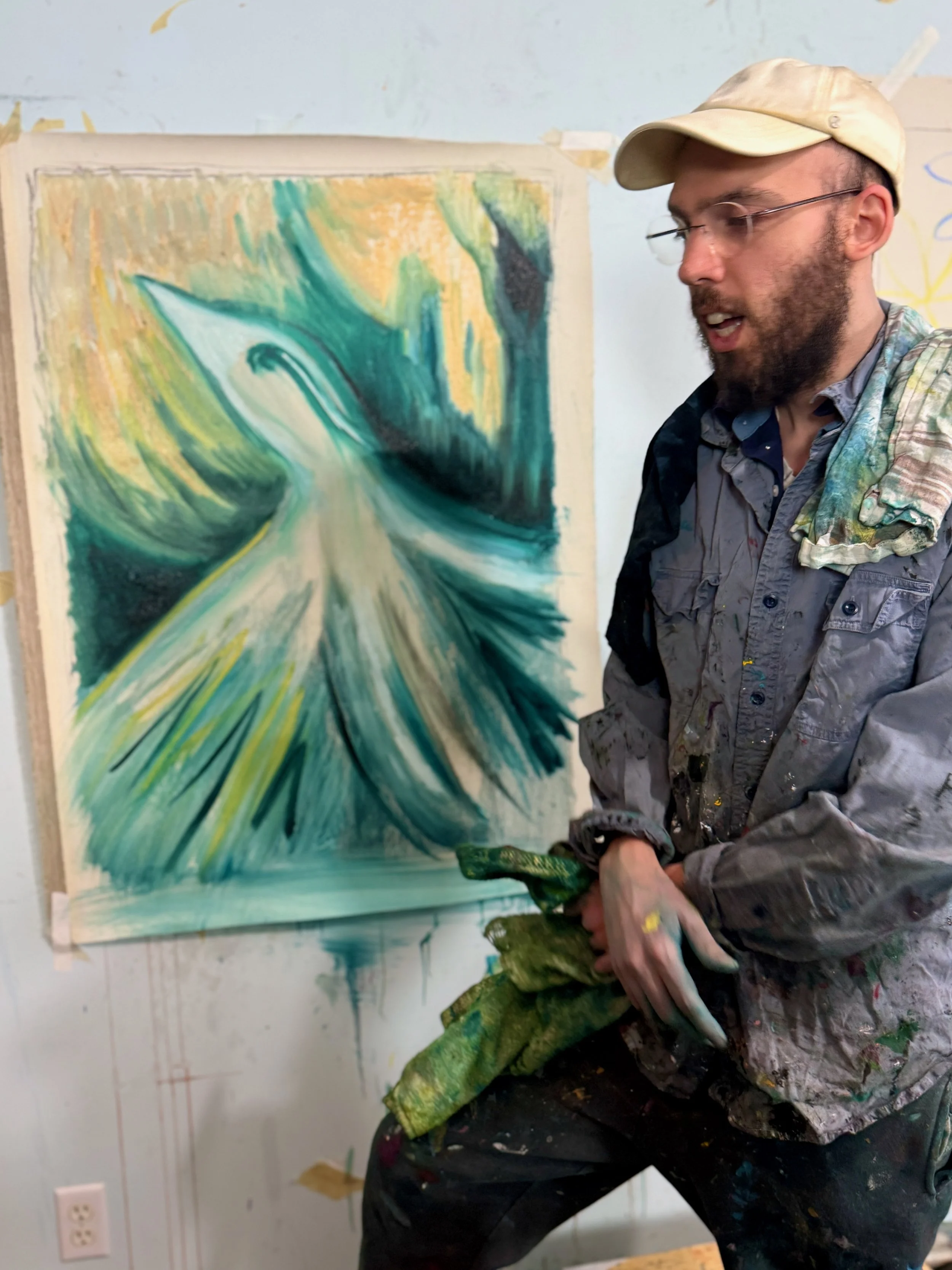
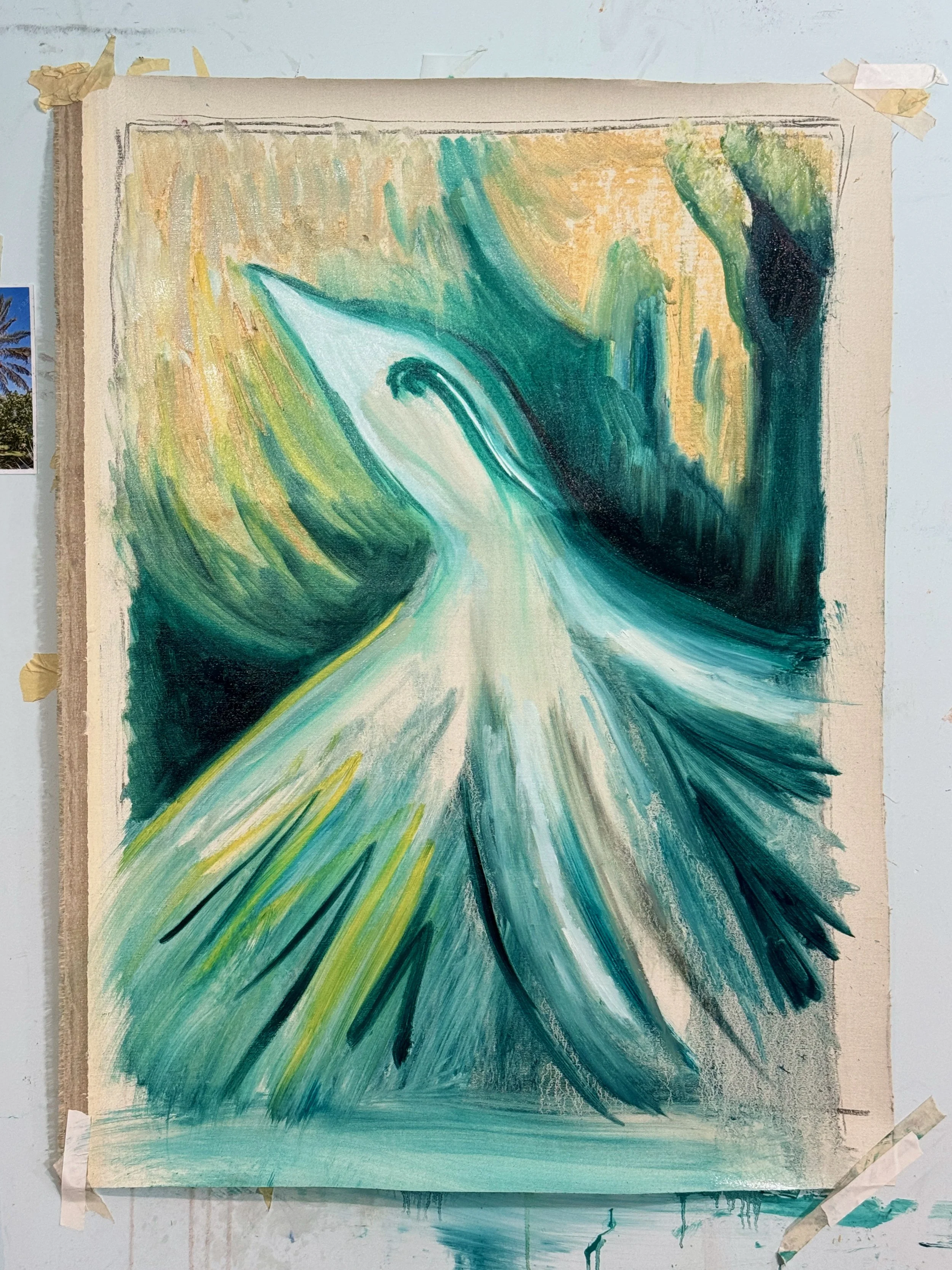
Whether in business, art-making, or relationship, I find increasingly that my life is improved by letting go of my own desire to control the outcome. I am learning to sink into the now, into the present, and experience process. Rituals and intentions revolving around this “beyond intellect” are the tuning-up, the workout, that prepares me for a life that is unpredictable, exciting, somewhat magical, and ultimately irrational.
At that dancing, until half past three in the morning, I saw golden light pouring down from the sky above Crown Heights, Brooklyn. On the way home my thoughts were united with transcendent wisdom—clarifying the big picture, bringing into alignment how to value a shared life. This mystical journey, this “religious experience,” is a part of my art.
I wrote in my sketchbook regarding artists I currently admire:
Oscar Murillo’s project comments on commodification, ingeniously negating painting and, in that way, making great paintings.
Rashid Johnson’s project is about inhabiting a ritualistic practice that explores Black identity and consciousness more broadly.
Samuel Abelow’s project is about a