
“Self Portrait Imagined as Sarah (My Princess),” oil paint on linen, 72 x 48 inches. 2024.
Someone recently told me that they enjoy when artists explain their work, or share a bit about what inspired the imagery. So I decided to do that for this painting from 2023.
In Kabbalah, the daughter of the king (bat melech), or the princess, may be understood as an image of the highest point of the soul—the yechidah.1
This aspect of the self, in my interpretation, signals total radiance, enthusiasm, and hopeful possibility: any hurt can be transformed by meaning; any coldness toward connection is annihilated in the presence of this state of being.
Sarah, the Matriarch, possessed various names, including Yiscah. Psychologically speaking, as a symbol, Sarah represents the complete soul.
The Talmud asks: why was she called Yiscah?
"Yiscah—this is Sarah. Why was she called Yiscah? Because she saw (sakhah) through divine inspiration, and because all gazed upon her beauty."2
The Mishnah teaches that one of the reasons a man marries a woman is beauty.3 But what is beauty?
Rav Yitzchak Ginsburgh explains that beauty is the harmonious revelation of inner unity: true beauty occurs when the soul shines through form and opposites are integrated into a living whole.4
The uniting of opposites is the ultimate expression of possibility and clarity, and belongs to the realm of the greater Self. As C. G. Jung writes, "The self is made manifest in the opposites and in the conflict between them; it is a coincidentia oppositorum."5 He continues: "Hence the way to the self begins with conflict."6 Elsewhere, Jung writes, "There is no coming to consciousness without pain."7
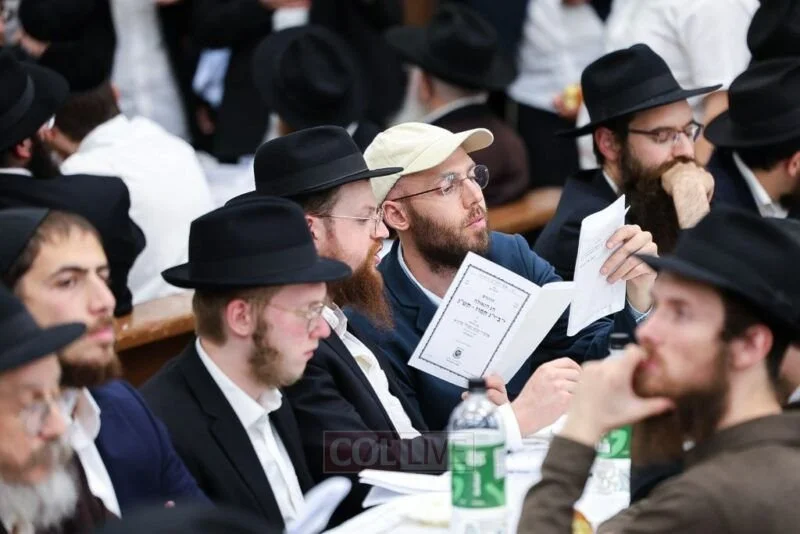
Learning chassidus in 770 Synagogue, Crown Heights, Brooklyn. June 28, 2026. Phot by ColLive.com
On the topic of pain: I included three birds in the painting. The two large hawks—one white on the left and one black on the right—are drawn from the Chassidic tale of the "Two Birds of Paradise." In one interpretation of this story, the black bird represents that which emerges from trial, tribulation, and immersion in a coarse physicality that separates a person from Godliness. The tale illustrates that "when darkness itself is transformed and turned into beauty, it becomes a beauty so great that all light is dimmed by its intensity."8
The smaller bird at the top, resembling a dove, mirrors the image of the woman below. It alludes to the highest dimension of the self—the yechidah—the point that transcends the opposites. Kabbalastic sources describe this aspect of self as being from atziluz and atzmus which is proceeds the conflict of opposites, good and evil, and even form itself, and related to “essence”. Although the symbol of the soul as princess alludes to this same idea, there is a more abstract, or less corporeal nuance to the symbol of the bird, which alludes to the loftiness and purity of this potential of psychological experience.
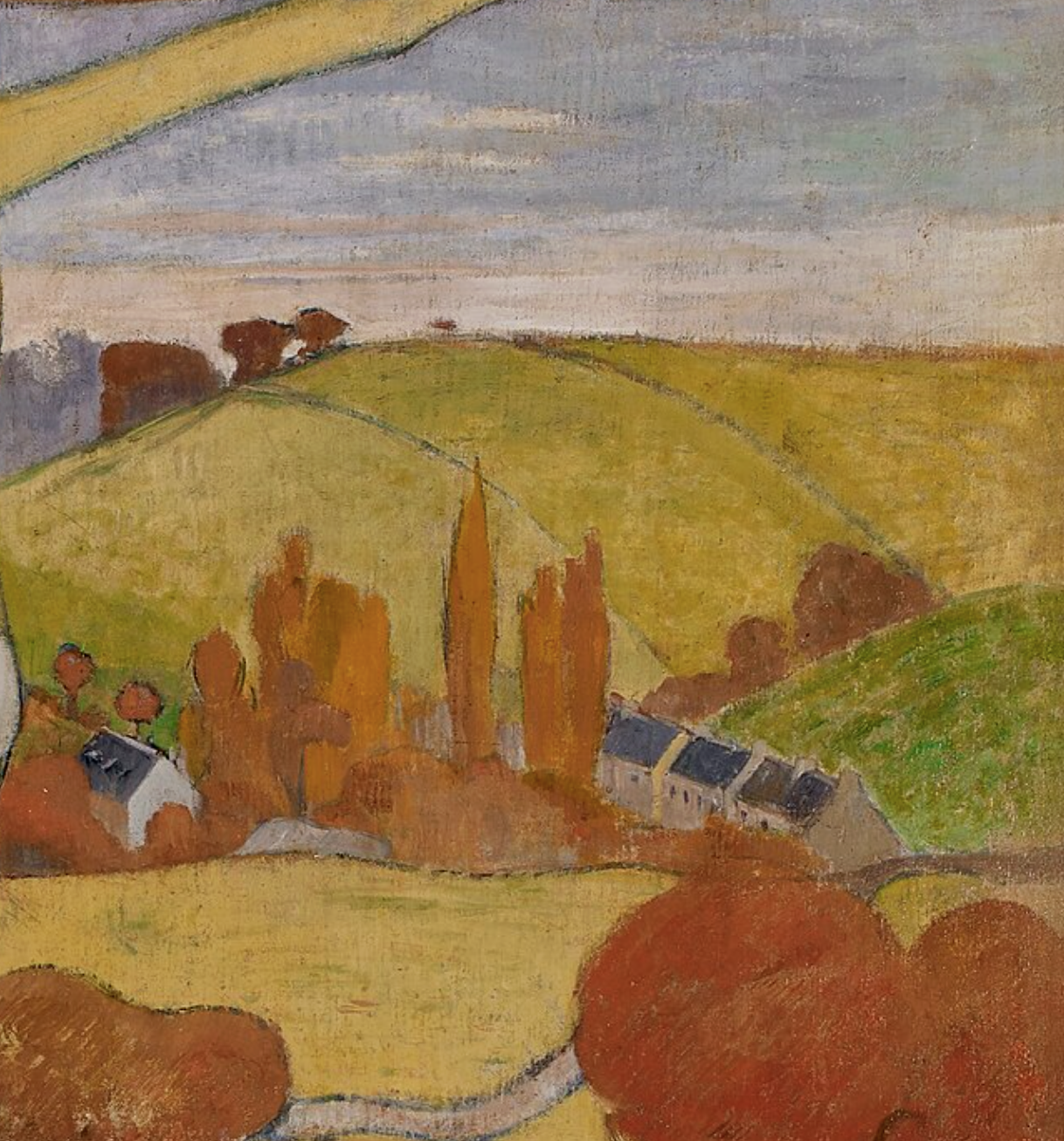
Detail of Paul Gauguin, “The Yellow Christ”. Oil on canvas. 1889.
The dolphins symbolize the erotic depths. Dolphins have long been associated with mermaids and, historically, with Aphrodite and other goddesses of love. This realm of tremendous vitality is uplifted into holiness and transformed into a more sublimated (aydel) form, suggested in the painting by the flowers, which stand next to the female figure, amongst the yellow hills. These hills, like Gauguin’s yellow motif; these hills like the pagan hills worshipped as goddess; alluding again to the chthonic goddess—to the vitality of instinctual being—which according to jewish mysticism and alchemy, can be transmuted and brought into an ethical life, a life that takes responsibility for the opposites, and integrates them into a civilized form.
My princess is eternal, and loves every moment anew.
Footnotes
For the five levels of the soul and the concept of yechidah, see Tanya, Likutei Amarim, ch. 2; see also discussions in Chabad Chassidic literature concerning the yechidah she-ba-nefesh.
Babylonian Talmud, Megillah 14a.
See: Kiddushin 70a.9, “Dance of the Maidens" in Ta'anit 26b. Also: Consciousness & Choice: Finding Your Soul Mate by Rabbi Yitzchak Ginsburgh. Also: Is Everyone Really Marriage Material?
by Yossi Ives: https://www.chabad.org/library/article_cdo/aid/5185480/jewish/Is-Everyone-Really-Marriage-Material.htm
This is a paraphrase of themes found throughout the teachings of Rabbi Yitzchak Ginsburgh found in Consciousness & Choice: Finding Your Soul Mate.
C. G. Jung, Aion, Collected Works, vol. 9ii, para. 61.
C. G. Jung, Aion, Collected Works, vol. 9ii.
C. G. Jung, The Development of Personality, Collected Works, vol. 17, para. 193.
Paraphrased from the Chassidic teaching The Two Birds of Paradise, available on https://www.chabad.org/library/article_cdo/aid/2220/jewish/Two-Birds-of-Paradise.htm